Eye Care & Vision
Test Article 2
7 mins read

Getting older is great. With age comes wisdom and the prospect of retirement. What’s not to love? One answer is failing eyesight due to presbyopia. As we grow older, many of us need help with our vision. The good news though is that, through the magic of multifocal lenses, crystal-clear sight remains accessible for everyone, however old we get.
From the moment we’re born, the lenses inside our eyes start losing elasticity. Once we hit 40 or 50, this loss tends to become more noticeable. Since the lens operates as our eye’s autofocus system, allowing us to see near and distant objects equally sharply, this creates an issue. Instead of clear sight, we find it harder to focus on objects close to us, without moving them further away. That’s why the condition is often called ‘too short’ or ‘long arm’ syndrome.
But why use a fun name when you can give it a Latin one?! The scientific name for this wholly normal condition is Presbyopia. You’ll usually know you’re developing it when things slowly become less clear close up, like a blurry book page, a hard-to-read message on your mobile phone or a difficult-to-discern font on your tablet or laptop. Basically, anything within arm’s length becomes a challenge.
Symptoms of presbyopia include:
Blurred vision when reading or doing close-up work.
The need to hold reading material at arm's length to see it clearly.
Eyestrain or headaches after doing close-up work.
Difficulty focusing between near and distant objects.
You may also notice that when you shift your gaze between different distances, it talks longer to bring them into focus. Presbyopia is separate from – and additional to – other eye conditions like short sightedness (myopia) and astigmatism. If you’re long-sighted (a hyperope), you may notice the onset of Presbyopia at a relatively early age, perhaps in your mid to late 30s. As soon as this blurring and confusion starts to become an issue, visit your optician to get your distance vision corrected.
Multifocal spectacles – also known as varifocals and progressives – have been around for years. The most established form is the simple pair of reading glasses. These correct for near vision, but if you look through them into the distance, all you see is a blur. Anyone who uses reading glasses soon gets used to pushing them down their nose – peering over the top to talk to someone, watch TV or focus on a computer screen. Hence the name ‘half-readers’.
The next step up is a pair of bifocals. As the name implies (bi meaning two), traditional bifocal lenses incorporate two different prescriptions. The top half covers distance vision and the bottom ‘window’ is for near distance vision, such as reading.
So with bifocals, there is no need to push these frames down to look at objects further away. You just look up, through the top half of the lens. Your grandparents probably wore (or still wear) this kind of multifocal glasses. You may have an image of them in your mind’s eye, tipping the frame or their head to ensure they’re looking through the right part of the lens.
Bifocals spectacles do a great job, so why would anyone want a better solution?
Well, they may work well at first, but as your eyes continue to lose elasticity, more power is needed in the bottom window for reading - and as the contrast in your prescription grows, intermediate images become increasingly blurry. It’s time for multifocals, letting you see clearly and seamlessly at all distances, from near to far.
Of course, you could select multifocal glasses, but there’s an alternative and arguably better option. The wonderful thing about a multifocal contact lens is that it does everything multifocal glasses can do, without having to move your head or be aware of the transition from one viewing distance to another. No one will ever guess you’re presbyopic: you simply wear these modern wonders of science and let them do all the adjusting work for you.
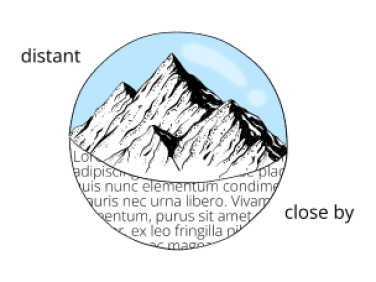
They do this through ‘concentric’ alternating rings of different powers, or an ‘aspheric’ design, which increases or decreases the power gradually from the center outwards.
This is placeholder text. If you are reading this, it is here by mistake and we would appreciate it if you could email us with a link to the page you found it on. This is placeholder text. If you are reading this, it is here by mistake and we would appreciate it if you could email us with a link to the page you found it on. This is placeholder text.

This is placeholder text. It's here by mistake and we'd appreciate it if you could email us with a link to the page you found it on. This is placeholder text. It's here by mistake and we'd appreciate it if you could email us with a link to the page you found it on. This is placeholder text. It's here by mistake and we'd appreciate it if you could email us with a link to the page you found it on.
This is placeholder text. It's here by mistake and we'd appreciate it if you could email us with a link to the page you found it on. This is placeholder text. It's here by mistake and we'd appreciate it if you could email us with a link to the page you found it on. This is placeholder text. It's here by mistake and we'd appreciate it if you could email us with a link to the page you found it on.
This is placeholder text. If you are reading this, it is here by mistake and we would appreciate it if you could email us with a link to the page you found it on. This is placeholder text. If you are reading this, it is here by mistake and we would appreciate it if you could email us with a link to the page you found it on. This is placeholder text.

This is placeholder text. If you are reading this, it is here by mistake and we would appreciate it if you could email us with a link to the page you found it on. This is placeholder text. If you are reading this, it is here by mistake and we would appreciate it if you could email us with a link to the page you found it on. This is placeholder text.